If you’re like most folks in process manufacturing, power generation, or even water treatment, you know that a valve isn’t just a hunk of metal that opens and closes. It’s the unsung hero keeping your whole system running smoothly—until it doesn’t. As a valve components supplier, I’ve seen way too many projects derailed by parts that seemed fine on paper but failed the second they hit the job site. Trust me, guessing performance doesn’t work. You need hard, measurable data. Let’s break down how we do it here (and how you can too) without overcomplicating things. Valve Components

First off, let’s get one thing straight: valve component performance isn’t just about “does it open?” It’s about how it performs over time, under real conditions, and how it plays nice with the rest of your system. I’ve had customers come to me saying their previous valve parts leaked after 6 months, only to realize the test lab only checked basic pressure ratings, not how the seal holds up under thermal cycling or vibration from nearby pumps. That’s the mistake most people make—they stop testing too early.
Let’s start with the basics you can actually see and check on the spot: leakage. This isn’t just “a little drip is normal” nonsense. There are actual standards here, and if your supplier isn’t talking about them, run. We use API 598 and ASME B16.104 as our go-to for shut-off leakage, right? But wait—those standards test at room temp, with clean water or air. Real life is way messier. If you’re working with hot oil, corrosive chemicals, or particles in the flow, that baseline leakage number goes out the window. So we also test leakage under operating temperature and pressure, not just lab conditions. Last year, a refinery customer told us their previous ball valves leaked 10x more when they upped the process temp by 50°F. Turns out the seal material they were using only worked at ambient temp. We swapped in our high-performance PEEK seals, and now their leakage is well below API Class V even at that elevated temp. That’s the kind of stuff that matters.
Next up, pressure and flow performance. This is where a lot of people get confused with flow coefficients (Cv) but don’t actually test it. Cv tells you how much water flows through a valve at a given pressure drop, but that’s for steady, clean flow. What about when you’re dealing with turbulent flow, cavitation, or flashing? Those are the things that eat valves alive. Cavitation happens when pressure drops below the vapor pressure of the fluid, forming bubbles that collapse and erode the valve internals. We test for this in our in-house flow loop—we pipe in actual customer fluids, adjust pressure and temperature to match their process, and monitor for cavitation noise (that sharp, cracking sound is a dead giveaway) and material erosion. A food and beverage client of ours had a problem with cavitation in their control valves that was causing premature wear and product contamination. We modified the trim design (the internal parts that control flow) to reduce pressure drop across the valve, and they reported zero cavitation-related wear in 18 months, compared to 3 months with their old parts. That’s concrete performance data, not just specs on a datasheet.
Then there’s cycle life—how many times a valve can open and close before it starts to fail. This is a big one for valves that get actuated a lot, like those used in batch processes. Our in-house test rig can cycle valves thousands, even millions of times, under load, to measure when performance drops below acceptable limits. We track things like seal wear, torque required to actuate the valve, and leakage rate after each cycle. A power plant customer came to us a while back because their gate valves were seizing up after just 10,000 cycles during routine maintenance. Our tests showed their stem was wearing unevenly because the guide bushing was made of a soft bronze that couldn’t handle the side load from frequent cycling. We switched them to our self-lubricating polymer bushings, and now they’re hitting over 100,000 cycles with no seizing. That’s the kind of durability you can’t get from a online spec sheet.
Don’t forget about material compatibility either. This is the #1 cause of unexpected valve failures, in my experience. I once had a chemical plant customer ask for valves for a hydrochloric acid line, and they specified 304 stainless steel. I tried to warn them that 304 isn’t great for concentrated HCl, but they insisted it was cheaper. Within 3 months, the valve body corroded through, spilling acid and shutting down their entire production line for 2 days. That cost them way more than saving a few bucks on cheaper parts. So material testing isn’t just checking if the metal matches a general “corrosive service” label—we expose test coupons of every valve component to the actual process fluid at operating temperature and pressure for weeks, even months, and measure weight loss, corrosion rate, and any material degradation. We also check for galvanic corrosion if multiple metals are used together—like a steel stem and brass nut—because if they’re not isolated properly, they’ll eat each other alive.
Another thing that’s often overlooked is actuator compatibility. A valve component is only as good as the actuator that operates it. If your valve has a high operating torque, and your actuator is undersized, it won’t open or close all the way, leading to leakage or wear. We test the torque required to operate our valves at different temperatures, pressures, and even after cycle wear, and provide that data to customers so they can pick the right actuator. We’ve had customers call us panicking because their new actuator wouldn’t open the valves we supplied—turns out they used torque data from a different valve manufacturer that was understated by 20%. By providing real, tested torque curves, we help them avoid that headache.
Vibration and noise performance matter too, especially in industrial settings where excessive vibration can loosen connections, damage pipework, and shorten component life. We mount our test valves on actual pipe sections from common process systems and subject them to vibration levels typical of refineries, power plants, and factories. We measure the amplitude of vibration on the valve body and internals, as well as noise levels, to make sure they’re within safe limits and won’t cause issues down the line. A water treatment client had a problem with their valve vibrating so much that the pipe brackets were breaking every few months. Our modified valve trim reduced turbulence, which cut vibration by 40%, and they haven’t had a broken bracket in over a year. That’s another performance win that comes from real-world testing.
Wait, let’s talk about how all this ties together for you as a buyer. You don’t need to become a valve testing expert—you just need to know what to ask your supplier. Don’t accept generic specs. Ask for third-party test data that matches your actual process conditions. Ask if they test with your specific fluid, at your temperature and pressure, not just room temp water and air. Ask about cycle life under your operating load, not just a number from a lab that uses a light, clean fluid. If a supplier can’t provide that, they’re probably cutting corners.
As a supplier, our whole model is built on delivering parts that perform when it counts. We don’t just sell off-the-shelf valves—we work with customers to test, customize, and deliver components that fit their exact needs. We know that a valve failure isn’t just a small repair; it’s downtime, lost revenue, safety risks, and even environmental issues. That’s why every part we leave our facility has passed our rigorous performance tests, tailored to the conditions our customers face.
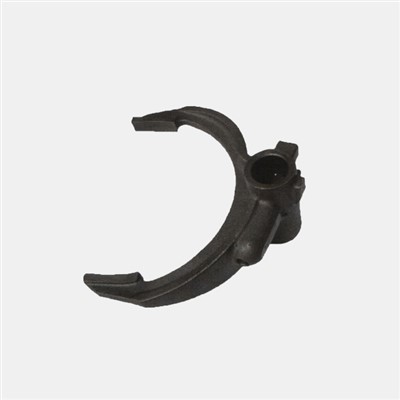
If you’re tired of valve components that look good on paper but fail when you need them most, let’s chat. We can walk through your specific application, share our test data, and make sure you get parts that perform reliably, no surprises. Whether you need standard parts for a maintenance replacement or custom-engineered components for a new project, we’ve got the experience and testing to back it up. Don’t gamble on guesswork—talk to us and get the performance data you need to keep your system running smooth.
Shaft Parts References
- API Standard 598: Valve Inspection and Testing
- ASME B16.104: Factory-Made Wrought Steel Valves for Pressure Piping Systems
- Control Valve Handbook, 5th Edition, Emerson Process Management
- Corrosion Testing Standards for Process Equipment, NACE International
Taizhou Liuhuan Machinery Co., Ltd.
As one of the most professional valve components manufacturers and suppliers in China, we’re featured by quality products and good service. Please rest assured to buy customized valve components made in China here from our factory. For quotation, contact us now.
Address: Xinyuan Industrial Zone, Damaiyu Street, Yuhuan City, Zhejiang Province,China
E-mail: tzlhmachining@gmail.com
WebSite: https://www.tzlhmachining.com/
