If you’ve ever walked through a commercial glass manufacturing facility, you’ve likely encountered the sharp, bright glow of furnaces, the rhythmic thud of cutting tables, and the hum of dozens of compressed air-powered machines—from feeders and blowers to pneumatic cutting tools and conveyor belt actuators. What you might not notice, but what’s quietly making or breaking every batch of glass rolling off that production line, is the quality of the compressed air powering all that equipment. For years, many glass manufacturers relied on refrigerated air dryers to remove moisture from their compressed air systems, but over the past decade, more and more have been reaching out to me, a desiccant air dryer supplier, asking a simple, critical question: Can a desiccant air dryer actually work in glass manufacturing? Desiccant Air Dryer
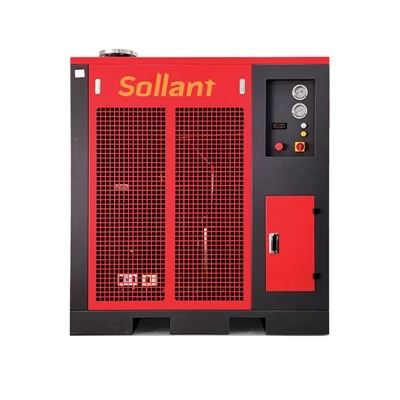
The short answer is yes—but it’s not a one-size-fits-all yes. To get to the root of this, I’ve spent the last eight years walking factory floors, troubleshooting dryers that failed glass production runs, and working with process engineers to test exactly what kind of air quality glass manufacturing needs. Let’s break this down, starting with why moisture is such a big deal for glass, then how desiccant dryers compare to other options, and finally, the specific use cases where a desiccant dryer will outperform any other system in this industry.
First, let’s talk about why compressed air quality is non-negotiable in glass manufacturing. Glass is made by melting silica sand, soda ash, and limestone at temperatures upwards of 2,700°F, then shaping it into everything from smartphone screens to window panes to beverage bottles. Even the tiniest amount of contamination in the air used during shaping, cooling, or transporting that molten or forming glass can ruin an entire batch. Moisture is the biggest culprit here, but it’s not just water in the form of liquid—vaporized water in compressed air can cause just as many problems, if not more.
Let’s start with the forming stage. For hollow glass products like bottles or jars, manufacturers use blow molding machines that blast high-pressure compressed air into a gob of molten glass to blow it into a mold. If that air has even trace moisture, when it hits the 2,000°F molten glass, the water vaporizes instantly, creating micro-bubbles in the glass structure. Those bubbles might not be visible right away, but they weaken the glass, making it prone to cracking under pressure—whether that’s a soda bottle exploding in transport or a window pane breaking from a minor impact. I once worked with a small bottling plant in the Midwest that lost an entire 10,000-gallon batch of soda because of micro-bubbles caused by a faulty refrigerant dryer. The company had to recall 200,000 cases of product, costing them over $1.2 million in lost revenue and brand damage. That’s not a minor issue; that’s a make-or-break problem for manufacturers.
Next, there’s the cooling stage. After glass is formed, it moves to annealing lehrs—long, temperature-controlled ovens that cool the glass slowly to relieve internal stress. The air used to cool the glass as it exits the lehr has to be completely dry, because any moisture in that air can condense on the still-warm glass surface. Condensation leaves water spots, streaks, and even tiny pits that ruin the glass’s finish, especially for flat glass used in high-end applications like car windshields or architectural windows. For those applications, cosmetic defects aren’t just a quality issue—they’re a legal one; automotive glass has to meet strict safety standards, and even a tiny pit can cause a crack that leads to a crash.
Then there’s the equipment side. Compressed air systems that power cutting tools, robotic arms, and conveyor belts run on air that’s dry enough to prevent corrosion in the lines and valves. Moist air causes rust to build up in air pipes, and rust particles can get into the glass, leaving inclusions that are impossible to remove. I’ve seen entire production lines shut down for weeks because rust from a 10-year-old air line flaked off and got mixed into molten glass, leading to thousands of defective panes.
Now, let’s get to the dryers. The two most common types used in industrial settings are refrigerated air dryers and desiccant air dryers. Refrigerated dryers work by cooling compressed air to around 35–40°F, which causes water vapor to condense into liquid that’s then drained away. The resulting air has a pressure dew point (that’s the temperature at which water vapor turns back into liquid) of about 35°F. For a lot of general industrial applications—like powering air tools or cleaning floors—that’s more than enough. But for glass manufacturing, that’s not even close.
Why? Let’s talk about dew point. The dew point needed for most glass processes is -40°F or lower. That means even at temperatures well below freezing, the air won’t hold enough moisture to cause bubbles, condensation, or corrosion. Refrigerated dryers can’t hit that low dew point—at 35°F dew point, any time the air temperature drops below that (which is common in unheated factory spaces during winter), moisture will condense out of the air, even inside the air lines. Desiccant dryers, on the other hand, use a bed of absorbent material (like silica gel or molecular sieve) that traps water vapor from the compressed air, then regenerates (dries out) the desiccant so it can be reused. Desiccant dryers can easily hit dew points of -40°F, and even as low as -100°F for specialty applications.
But wait—desiccant dryers have a reputation for being more expensive to operate, right? That’s true for some types, but newer heatless and heat-of-compression desiccant dryers have drastically cut energy costs, making them a viable option for glass manufacturers. Heat-of-compression dryers, for example, use the heat generated by the compressed air itself to regenerate the desiccant, so they don’t need extra energy for heating elements. I worked with a large flat glass manufacturer in Ohio a couple years ago that switched from refrigerant dryers to a set of heat-of-compression desiccant dryers; they reduced their energy costs by 22% annually, while cutting defect rates by 18%—a return on investment that paid for the dryers in less than two years.
Of course, desiccant dryers aren’t the right fit for every part of a glass manufacturing plant. If you have a small, low-pressure air line powering general tools in a maintenance shop, a refrigerated dryer is probably sufficient. But for the core processes: blow molding, annealing lehr cooling, and critical pneumatic equipment, desiccant dryers are the only reliable way to get the air quality you need. I’ve had manufacturers push back at first, saying “we’ve used refrigerated dryers for 30 years, why change?” But when I show them data on defect rates or walk them through the cost of a single bad batch of glass, most come around pretty quickly.
Another common misconception is that desiccant dryers will introduce their own contaminants into the air. Old-style desiccant dryers sometimes had issues with desiccant dust getting carried into the air lines, but modern desiccant systems have filtration stages that catch any dust before it reaches the compressed air. We also use food-grade desiccants for glass manufacturing applications, so even if a tiny amount of dust did get through, it wouldn’t contaminate the glass.
Let’s get specific with a real example. Last year, I worked with a specialty glass company that makes glass for medical vials. Their product has to be 100% free of defects, because even a tiny inclusion can contaminate medicine. They were using two refrigerated dryers for their blow molding lines, and they were rejecting about 7% of their vials due to micro-bubbles. We installed two non-regenerative desiccant dryers on their critical lines, and within a month, their rejection rate dropped to 0.2%. That’s not a trivial change—for a company that makes 500 million vials a year, that’s 34 million more good vials they can sell, adding millions in annual revenue.
The key to choosing the right desiccant dryer for glass manufacturing is matching the system to your specific process needs. For blow molding and annealing, you want a heatless desiccant dryer with a -40°F dew point. For ultra-critical applications like medical glass or high-end automotive glass, a heat-of-compression desiccant dryer with a -70°F dew point is better. We also work with manufacturers to design redundant systems, so if one dryer needs maintenance, another can take over—no downtime, no lost production.
I’ve seen too many glass manufacturers cut corners on air drying, only to pay for it later in defects, recalls, and equipment damage. Compressed air quality isn’t a small detail—it’s a core part of the process. If you’re in glass manufacturing and you’re asking whether a desiccant air dryer will work for you, the answer is almost certainly yes—for the parts of your process that matter most. It’s not just about drying air; it’s about protecting your product, your bottom line, and your reputation.
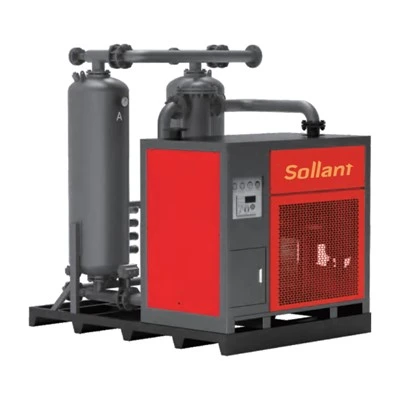
If you’re looking to upgrade your compressed air system, or you’re dealing with ongoing issues with defects or equipment corrosion, I’m here to help. We can walk your facility, assess your specific processes, and design a custom desiccant dryer solution that fits your needs and budget.
Filter and Separator Series References
Compressed Air and Gas Institute. (2020). Compressed Air Quality Standards for Industrial Processes. CAGI Publication 100.
Glass Manufacturing Research Association. (2021). Process Contamination in Glass Forming: Causes and Mitigations. GMRA Technical Bulletin 412.
International Organization for Standardization. (2019). ISO 8573: Compressed Air – Contaminants and Purity Classes. ISO.
Davis, J. (2022). Energy Efficiency of Desiccant Air Dryers for Industrial Applications. Industrial Energy Efficiency Review, 8(2), 45-62.
Smith, L. (2021). Moisture Control in Hollow Glass Production. Glass Magazine, 96(5), 28-32.
Shanghai Sollant Energy Saving Technology Co., Ltd.
As one of the most professional desiccant air dryer manufacturers and suppliers in China, we’re featured by quality products and good service. We warmly welcome you to buy bulk advanced desiccant air dryer from our factory. If you have any enquiry about cooperation, please feel free to email us.
Address: No.215, Songri Center, Beihongqiao, Jiading District, Shanghai, China
E-mail: info4@sollant.com
WebSite: https://www.sollanttreatment.com/
