Hey there, fellow steel geeks, metallurgists, and anyone who’s ever wondered why some steel parts just don’t crack when they’re supposed to (looking at you, failing gears or bridge components). Today, I want to talk about something I get asked about all the time as an LF/VD/VOD refining furnace supplier—how exactly this combo of furnaces works to boost steel’s toughness. Spoiler: it’s not magic, it’s super precise chemistry, heat control, and getting rid of the junk that makes steel brittle. Let’s break it down like we’re chatting over a cup of coffee, not sitting through a boring seminar. LF/VD/VOD Refining Furnace
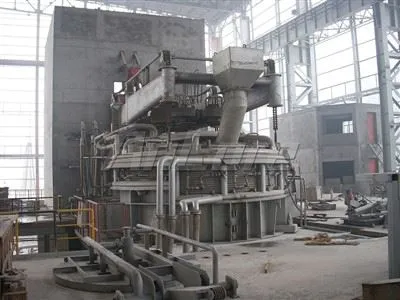
First, let’s cut through the acronym confusion because I know a lot of folks roll their eyes at these three letters. LF stands for Ladle Furnace, VD is Vacuum Degassing, and VOD is Vacuum Oxygen Decarburization. We use these in a sequence (sometimes a bit overlapping) right after the initial steel is made in a basic oxygen furnace or electric arc furnace. That first stage is about melting iron and scrap, but it leaves all kinds of impurities that kill toughness. Think of those impurities as tiny “weak points” in the steel—like bubbles, sulfur, nitrogen, excess carbon, and even random bits of non-metallic gunk (we call them inclusions). If you leave those in, steel breaks way too easy, especially under stress or in cold weather.
Let’s start with why those inclusions suck so bad. Take sulfur, for example. Sulfur is the main culprit behind “hot shortness”—that’s when steel gets all crumbly and breaks if you work with it while it’s hot, like rolling it into sheets or forging parts. But here’s the thing: even if you get rid of most sulfur in the initial melt, there’s still a bunch left that’s trapped in those tiny, sharp particles. Those particles act like little knives cutting through the steel’s grain structure. When the steel is under load, those sharp inclusions create stress cracks that spread fast. Same with nitrogen—it forms brittle nitrides that make steel hard but not tough, like a cookie that’s too dry and breaks when you bend it. And those little gas bubbles? They leave voids where cracks can start too.
So how does the LF step fix this first? The Ladle Furnace is basically a big heated pot where we hold the molten steel, right? Here’s where we add alloying elements carefully, but also blow argon gas through the bottom to stir the steel gently. This stirring does two huge things: first, it makes all the chemistry super even, so we don’t have hot spots where there’s too much sulfur or not enough manganese. Second, it starts to float those inclusions to the top. The argon bubbles act like little magnets for the non-metallic stuff—they stick to the bubbles, rise to the surface, and we can skim that off into the slag (the top layer of gunk we remove). Also, in the LF, we can adjust the temperature super precisely—like within a few degrees—because if steel is too cold, the inclusions don’t float, and too hot, we might mess up the grain size. I’ve seen shops skip the LF and end up with steel that has way more inclusions, no matter what they do next. That’s not worth saving a few bucks on equipment, trust me.
Then we move to either VD or VOD, depending on what kind of steel we’re making. Wait, let’s clarify—VD is for low-carbon steels, like structural steel or some alloy steels, and VOD is for super high-alloy steels, like stainless steel or tool steel, where we need to control carbon really tight. Either way, vacuum is the star here. In a vacuum, the pressure is super low, so gases like hydrogen and nitrogen just boil out of the molten steel. Hydrogen is another big one for brittleness—“hydrogen embrittlement” is when hydrogen gets trapped in the steel and causes it to crack suddenly, even without a big load. I’ve had customers come to me with parts that broke out of nowhere, and 9 times out of 10, hydrogen was the culprit because they skipped vacuum degassing. In VD, we hold the steel under vacuum for 15-30 minutes, stirring with argon the whole time, so all that hydrogen and nitrogen just escape into the vacuum pump system. That’s like taking a dry sponge out of water—we’re squeezing out all the gas junk.
For VOD, since we’re dealing with high-alloy steels that need very low carbon (like less than 0.03%), we blow a little oxygen into the steel under vacuum to burn off excess carbon. But here’s the trick: we do it slowly so we don’t mess up the other alloys, like chromium. If we didn’t control carbon that way, we’d have way too much chromium carbide, which is super brittle. By burning off carbon in the vacuum, we keep the steel’s grain structure fine-tuned—think of it like a well-organized neighborhood where there’s no overcrowding of brittle compounds. When the grain size is small and evenly shaped, it’s way harder for cracks to spread. If grain size is big, cracks can run through whole grains like a bulldozer, but small grains force cracks to turn, which uses up way more energy before the steel breaks.
Wait, let’s talk about that grain structure because that’s key for toughness. Toughness isn’t just “not breaking”—it’s about how much energy steel can absorb before it cracks. That energy absorption comes down to how the metal crystals (grains) are arranged. If we have those tiny, uniform grains because we removed the impurities that mess with grain growth, the steel is both strong and tough. If there are inclusions, those grains grow unevenly, so you get big, weak spots. Also, when we combine these three furnaces, we can control the cooling rate too—after refining, we can cool the steel slowly or quickly, depending on the grade, to lock in that good grain structure. A lot of guys think refining is just about removing junk, but it’s also about shaping the steel’s internal structure so it can handle stress.
I should mention a real example here because numbers make it real. Last year, a customer who makes heavy-duty gear parts came to us because their previous supplier’s steel was breaking at 20 kJ on the Charpy V-notch test (that’s the standard test for toughness, where you hit a notched steel sample and measure how much energy it absorbs before breaking). They switched to our LF/VD/VOD setup, and now their steel hits 65 kJ—way above the industry standard for that grade. Why? We took sulfur from 0.015% down to 0.002%, hydrogen from 3 ppm to 0.5 ppm, and nitrogen from 0.012% to 0.004%. Those tiny changes made all the difference because there were no sharp inclusions or trapped gases to start cracks. They’re now running 30% less scrap from broken parts, which saves them millions a year. That’s the impact of getting the refining right.
Another thing I get asked: “Can’t I just use one furnace instead of three?” No way. Each one has a specific job, and skipping steps messes everything up. The LF is for adjusting chemistry and floating inclusions before you do vacuum—if you put dirty steel into a vacuum, the inclusions don’t come out as well, and you waste energy. VOD is necessary for high-alloy steels because you can’t get low carbon any other way without messing up the other elements. Mixing them up would be like trying to bake a cake with only an oven and no mixing bowl—you get a lumpy mess.
Wait, let’s address a common myth: some people think adding more alloys makes steel tougher, but if you have junk in there, even the best alloys don’t work. Like, if you add manganese to make steel stronger, but there’s sulfur there, manganese will bond with sulfur to make MnS inclusions, which are still sharp and bad. The refining process lets us add the right alloys in the right amounts after removing the sulfur, so the alloys do their job instead of bonding with impurities. That’s why it’s a sequence, not random steps.
Now, I know a lot of guys in the steel industry are old-school and skeptical about new equipment, but here’s the thing: the parts they’re making today are way more demanding than 20 years ago. Wind turbine gears have to handle millions of rotations, bridge beams have to survive extreme weather, and aerospace parts need to be light but unbreakable. You can’t do that with steel that has even a tiny bit of trapped gas or sharp inclusions. The LF/VD/VOD isn’t just a luxury—it’s how you make steel that actually performs.

So, if you’re dealing with brittle steel, high scrap rates, or parts failing in the field, let’s chat. I’ve worked with shops of all sizes, from small forges to big mills, and I can help you figure out if an LF/VD/VOD setup is right for your needs, no sales jargon, just straight talk. Whether you need a full sequence or a custom setup, I’m here to make sure you get steel that’s tough enough to do the job.
Electric Arc Furnace Oh, and before I go, I should note that the science here is backed by years of metallurgical research—nothing I said is made up. Just real-world results from working with steel every day. If you want to dive deeper, there are standard references on ladle metallurgy and vacuum refining that cover the grain structure and impurity removal in detail, no fancy degrees needed to follow them.
Xi’an Ancore Furnace Complete Set Of Equipment Co., Ltd.
As one of the most professional LF/VD/VOD refining furnace manufacturers and suppliers in China, we’re featured by quality products and good price. Please rest assured to buy durable LF/VD/VOD refining furnace made in China here from our factory. We also accept customized orders.
Address: Yongli 11007, No.6 Jinye 1st Road, Yan Ta District, Xi’An City, Shan Xi,China.
E-mail: info@ancorefurnace.com
WebSite: https://www.ancorefurnace.com/
