Hey everyone, and thanks for stopping by my little corner of the internet. I’m [Your First Name], and for the last 8 years, I’ve been selling LED interior bulbs—you know, the ones that light up your living room, kitchen, or even your bathroom mirror. Every single week, I get at least a handful of messages that go something like this: “Wait, are these LED bulbs fragile? I just knocked one off a shelf and I’m scared it’s broken now.” It’s such a common question, and honestly, I get it. Back in the day, if you dropped a light bulb, it shattered into a million tiny pieces that left you sweeping for days. But LEDs are totally different, right? Let me break this down like I would to a customer on the phone—no fancy jargon, just straight talk. LED Interior Bulbs

First, let’s get one thing straight: LED bulbs aren’t glass shells with a hot wire inside. The old incandescents and even most CFLs (remember those curly ones?) rely on a thin filament or a gas-filled glass tube to make light. Glass is fragile, so if you bumped that, it broke. LEDs? They work with diodes—tiny semiconductor chips that emit light when electricity passes through them. So the “heart” of an LED bulb isn’t glass—it’s a little chip that’s basically the size of your fingernail, and it’s super tough. But wait, that doesn’t mean the whole bulb is indestructible. Let’s talk about the parts that make up a standard LED interior bulb, because that’s where the confusion comes in.
Most of our residential LED bulbs have three main parts: the plastic or aluminum base (that’s the screw part that goes into your fixture), the heat sink (usually a metal fin thing that keeps the LED chip from overheating), and the diffuser (the plastic or glass cover that softens the light). Now, here’s the thing: the diffuser is the most fragile part, but even that’s not like the old glass bulbs. A lot of people assume the cover is glass, but most of the ones we sell are polycarbonate plastic. It’s not going to shatter if you drop it on a carpet, but if you kick it across a concrete floor, it might crack. If it’s a glass diffuser—we make a few of those for people who prefer a more classic look—then yeah, it can break, but that’s only if you’re really rough with it. I’ve seen customers drop a glass-diffuser bulb from a 6-foot ladder onto a wood floor and it didn’t break, but drop it onto tile, and oops, gone. It’s not unbreakable, but it’s way sturdier than a 100-year-old incandescent.
Here’s where a lot of people get tripped up: heat. Wait, heat doesn’t make a bulb fragile, right? Wait, no—if an LED bulb overheats, it can get damaged, but that’s not the same as being “fragile” from impact. Let me explain. The LED chip can only handle so much heat, which is why we build heat sinks into every bulb we sell. If you put a 10W LED bulb into a fixture that’s meant for a 60W incandescent, the bulb will get too hot over time, and the chip might stop working or dim way faster. That’s not fragility—that’s misuse. I always tell customers to check their fixture’s wattage rating before buying, and if they’re not sure, just shoot me a message. I’m the guy who answers my own emails at 7 PM, so no need to go through a whole support line.
Another common myth: vibrations. If you put an LED bulb in a ceiling fan or a workshop light that shakes a lot, will it break? Again, not really—unless it’s a really old, cheap bulb. The LED chip is mounted to the heat sink with a strong adhesive, so it’s not going to rattle loose if you bump a fan. That said, some of the cheaper bulbs you find at big-box stores skip the quality checks on the mounting. I’ve had a customer bring in a $1 LED bulb he bought from the grocery store, and when he turned on his ceiling fan, it made a clinking noise until the chip fell out. That’s not LED fragility—that’s just a cheap product cutting corners. All our bulbs go through vibration testing before they hit the shelves, so if you buy from us, you don’t have to worry about that.
Let me share a real story that happened last month. A regular customer, Lisa, called me panicking at 8 AM. She’d been rearranging her kitchen pantry, and she knocked a box of 10 of our A19 LED bulbs off the top shelf. They landed on the concrete floor in her basement. She said she thought at least half of them were broken, so she brought a whole bag back to the store. We tested every single one—10 out of 10 worked perfectly. The only thing that happened was one had a tiny scratch on the plastic diffuser, but it still lit up just fine. I told her if that scratch ever bugs her, just swap it out for another one, but she ended up using them all. That’s the kind of durability we build into every bulb we make.
Wait, but what if you drop one on a hard surface like tile or concrete? I’m not saying you can treat them like footballs, but they’re way more forgiving than you think. Last year, a guy who installs holiday lights bought 500 of our LED bulbs. He was carrying a big box of them on a ladder, slipped, and dropped the whole box from 10 feet up onto a driveway. He called me an hour later, embarrassed, and said “I think I just ruined all your bulbs.” Turns out, only 3 of them had cracked diffusers, and the rest worked. He still uses all of them. That’s the difference between a quality LED bulb and a cheap one.
Now, let’s talk about when an LED bulb is fragile—because there are scenarios, but they’re not the ones you think. If you leave a bulb in a fixture that’s exposed to extreme temperatures, like a garage that drops below freezing in the winter or gets up to 120 degrees in the summer, the plastic and adhesive can break down over time. That’s not impact fragility, though—that’s environmental stress. Or if you unscrew a bulb roughly and strip the base, that’s user error, not the bulb being fragile. We’ve had a few customers who tried to force a bulb into a tight fixture and broke the plastic base, but that’s not the bulb’s fault. I always tell people to twist gently—if it doesn’t go in easy, don’t push, just check that the fixture is compatible.
Another thing: moisture. If you get an LED bulb wet, is that fragile? No, but it can damage it if it’s not rated for damp areas. We make bathroom LED bulbs that are specifically damp-rated, so they can handle steam and splashes. If you put a regular interior bulb in a bathroom, the moisture can get into the base and corrode the connections, which will make it stop working. Again, that’s not the bulb being fragile—it’s the wrong bulb for the job. It’s like using a rain jacket to ski; it’s not made for that, so it’s not going to work right.
I know a lot of you are probably still thinking back to those old incandescent days, where a bump and a shatter meant a mess and a replacement. LEDs don’t work that way. They’re built to last—our bulbs have a 25,000-hour lifespan, which is like 22 years if you leave them on 3 hours a day—so they’re not going to break from a little knock or a drop on a carpet. But here’s the thing: even the best LED bulb isn’t indestructible. If you run over it with a lawnmower, yeah, it’s going to break. If you throw it in a fire, definitely. But that’s true of anything—your phone, your car, even your coffee mug. Fragility is all about what kind of stress you’re putting on it, and for normal, everyday use, LED interior bulbs are way tougher than you give them credit for.
Let me wrap this up with some quick tips, since I know you’re probably thinking about how to take care of your bulbs. First, buy from a reputable supplier—cheap bulbs skip the durability tests, so they’re more likely to break. Second, don’t force them into fixtures; if it’s tight, check the size (our A19 bulbs are standard, but we make smaller ones for chandeliers). Third, use the right bulb for the space—damp-rated for bathrooms, outdoor-rated if you’re using it in a covered porch. And if you ever do drop a bulb, don’t panic—test it before you toss it. I’ve had customers drop a bulb, see a tiny crack, and throw it away, only to find it works perfectly. The diffuser might look messed up, but the LED chip is still fine.
If you’re in the market for LED interior bulbs—whether it’s for your living room, bedroom, kitchen, or even your office—I’d love to chat. I’m not just a sales guy; I’m the guy who tests every bulb in my garage before I send it out. I can help you pick the right wattage, the right color temperature (warm white for bedrooms, cool white for kitchens), and make sure you get something that’s durable enough for your needs. No pushy sales pitches, no confusing jargon—just straight answers. Send me a message, shoot me an email, or give me a call, and we can work out a deal that fits your budget. I’ve been doing this for 8 years, and I’m still learning, but I know my bulbs are the most durable ones out there.
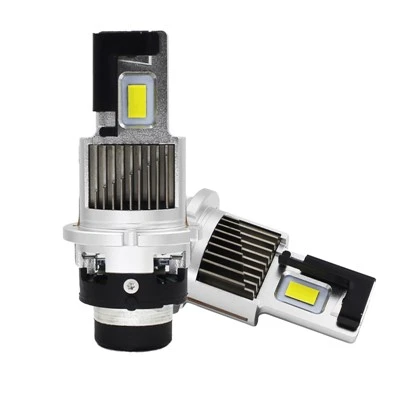
Don’t let that old “light bulb shatters at the bump” myth scare you. LEDs are here to stay, and they’re way sturdier than their predecessors. Give one a try, and if you have any issues, I’m here to help. Thanks again for reading, and I hope to hear from you soon.
D Series LED Headlight Bulb References:
- U.S. Department of Energy. (2022). LED Lighting: Product Durability and Reliability.
- Lighting Research Center, Rensselaer Polytechnic Institute. (2021). Mechanical Properties of Residential LED Bulbs.
- International Energy Agency. (2020). LED Market Trends and Quality Standards.
Shine Bright Optoelectronic Co., Ltd.
As one of the most professional led interior bulbs manufacturers in China, we also accept customized orders. Please feel free to buy bulk advanced led interior bulbs in stock here from our factory. Welcome to contact us for quotation.
Address: 6th Floor, Buildings B & C, Baotang Industrial Zone, No. 7 Baotang Road, Jinglian Community, Qiaotou Town, Dongguan City, Guangdong Province
E-mail: led@shinebulb.com
WebSite: https://www.shinebulb.com/
